Skip to content
Steady ConyersWater Damage Restoration

Stains, sags and drips from above in Conyers

Ceiling and Wall Leaks in Conyers, GA

Ceiling and wall leaks in Conyers, GA usually begin as a brown patch, paint that bubbles, or a drip that never seems to match the weather. Is the stain growing, and where is it coming from? Call (678) 940-8196 and tell the contractor what you can see from the floor.

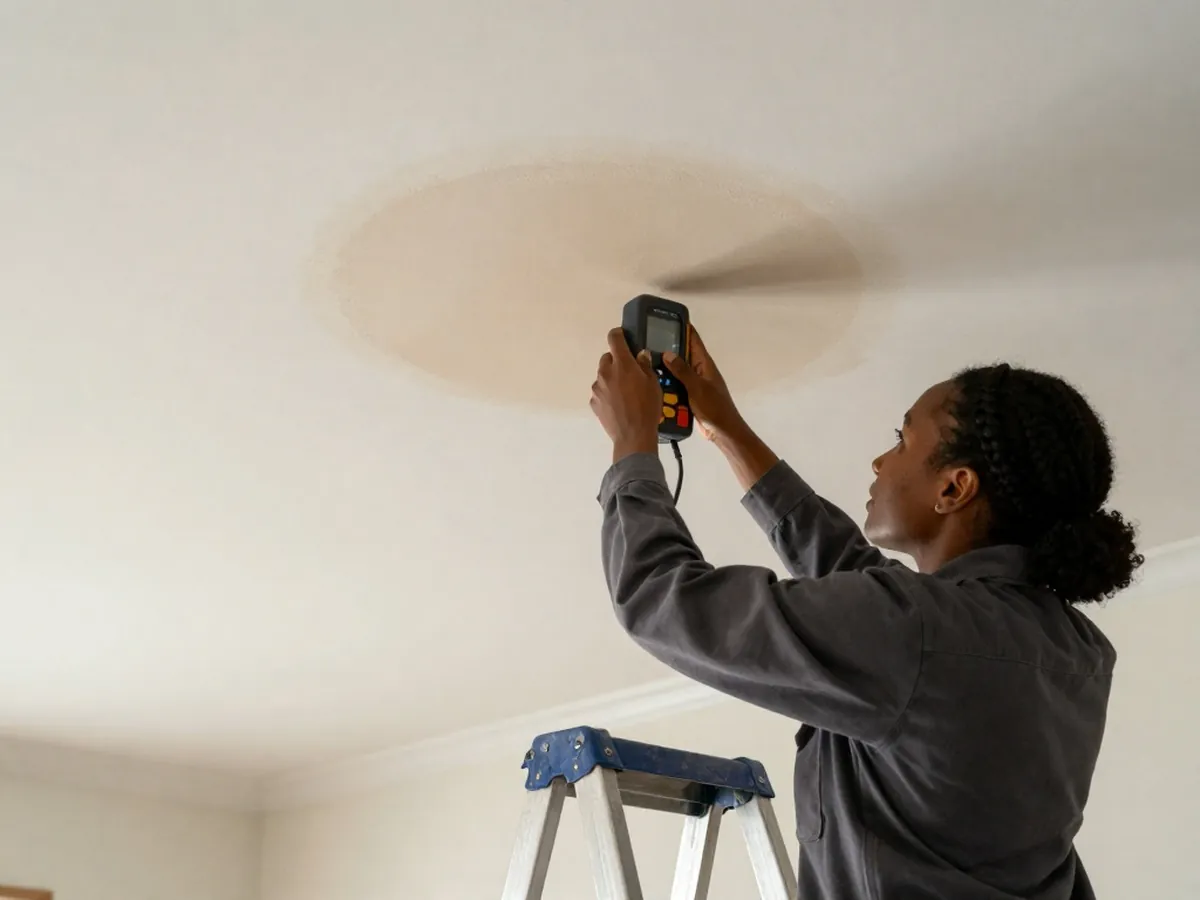
Technician on a stepladder checking a stained ceiling with a moisture meter
Fig. 1Technician on a stepladder checking a stained ceiling with a moisture meter

Work through it

Read the stain like a timeline

  1. When did it first appear, and did you see it change?

    Pencil a line around the edge and write the date beside it.

  2. What was happening when it grew?

    Rain, a shower upstairs, the washer or the air conditioner running each point somewhere different. Notes on timing are among the most useful clues a contractor can get.

  3. Is anything else wet?

    Check the wall below, the closet beside it and the room above. A leak rarely stays in one spot.

  4. Is the ceiling holding its shape?

    A flat surface is one situation. A sag or a bulge belongs on the get-help-first list.

What the contractor looks at

  1. Call (678) 940-8196, describe the stain and when you first saw it, and a visit can be set up.

  2. Following the stain back to its source, which can sit above or beside the spot where it shows.

  3. Taking meter readings across the ceiling, the wall and the framing, then checking them against a dry spot.

  4. Checking for sag, and judging whether the ceiling needs to be opened so trapped water can drain.

  5. Looking at the insulation above the ceiling, which can stay wet after the surface looks dry.

  6. Laying out repair choices, and which office to ask about drywall or roof paperwork.

Asked and answered

How urgent is a ceiling stain, graded from 1 to 10?

Grade 8 to 10: the ceiling sags, water drips through a light or fan, or you smell gas. Move out from under it and use 911 or the utility, then call (678) 940-8196 about the damage. Grade 4 to 7: the stain grows after each rain or shower. Call this week. Grade 1 to 3: a pale mark that has not changed in a month. Date it in pencil and watch.
Why can a wet ceiling come down without warning?

FEMA and the Red Cross call soaked plaster and wallboard very heavy and a danger when it comes down, and say a ceiling can hold trapped water. Stay out from under any sag. Whether and how to open it is the contractor's call, not a job for a broom handle.

Does the insulation above a wet ceiling matter?

North Dakota State advises removing and replacing insulation that got soaked, since it can stay wet for months. University of Georgia Extension adds a point about wet fibrous insulation in walls: it has to come out and be replaced, even when the wallboard on top looks dry. The contractor can look above the ceiling to see whether that applies.

Dry it, cut it or replace it

Plaster, drywall or insulation: what each one does when wet

Plaster

North Dakota State says plaster usually does not need replacing, though it takes a very long time to dry. Mississippi State says it can take weeks or months and may not be ruined by water.

Wallboard

Mississippi State says sheetrock swells and falls apart in water, and North Dakota State says wallboard soaked by dirty floodwater needs replacing.

Insulation

Wet insulation above a ceiling is easy to forget. North Dakota State says to remove and replace it.

Ask the contractor which of the three you have, and which parts of it are wet.

Technician on a stepladder checking a stained ceiling with a moisture meter

Reading the picture

The handheld meter in the picture

A technician stands on a stepladder in the picture, holding a handheld moisture meter against a ceiling with a round tan stain. The meter gives a number for how wet the surface is. One reading means little. Several readings, moving outward from the stain's edge and compared with a dry patch of the same ceiling, outline how far the water went.

The stain on the ceiling is only the part that shows. The numbers help find the part that does not.

Habits that cost more

Mistakes that make a ceiling job larger

Poking the bulge to see what is inside.

Wet drywall breaks easily, and the water behind it comes down all at once.

Painting over the stain.

Mississippi State and North Dakota State both say walls need to dry before they are repainted or covered, and a stain that dries pale can come back.

Standing under the sag to look at it.

A glance from the doorway is enough.

Assuming a dry surface means a dry ceiling.

Insulation above it can stay wet, as the extension guides note.

What you may notice

  • A faint stain that darkens each time it rains or the shower runs
  • Paint that blisters or peels in one patch of wall
  • One corner of the ceiling that sits lower than the rest
  • A musty smell in an upstairs closet or hall
  • A damp patch on the wall below a bathroom or laundry room

Paperwork and licensing questions

Ceiling repairs and paperwork

Each town handles this differently. Conyers lists a building permit for repairs, Covington applies the 2024 residential and plumbing codes with Georgia amendments, and Lithonia lists roof and interior finish among its permit types. The offices and phone numbers are in contractor rules for Conyers.

Call (678) 940-8196