Skip to content
Steady ConyersWater Damage Restoration

Washers, water heaters and dishwashers in Conyers

Appliance and Water Heater Leaks near Conyers

A leak from an appliance or water heater in Conyers, GA is easy to miss at first: a damp patch behind the washer, a puddle around the base of the water heater, or a ceiling stain under an upstairs laundry. Not sure how long it has been going? Call (678) 940-8196 and tell the contractor which appliance it is and how old.

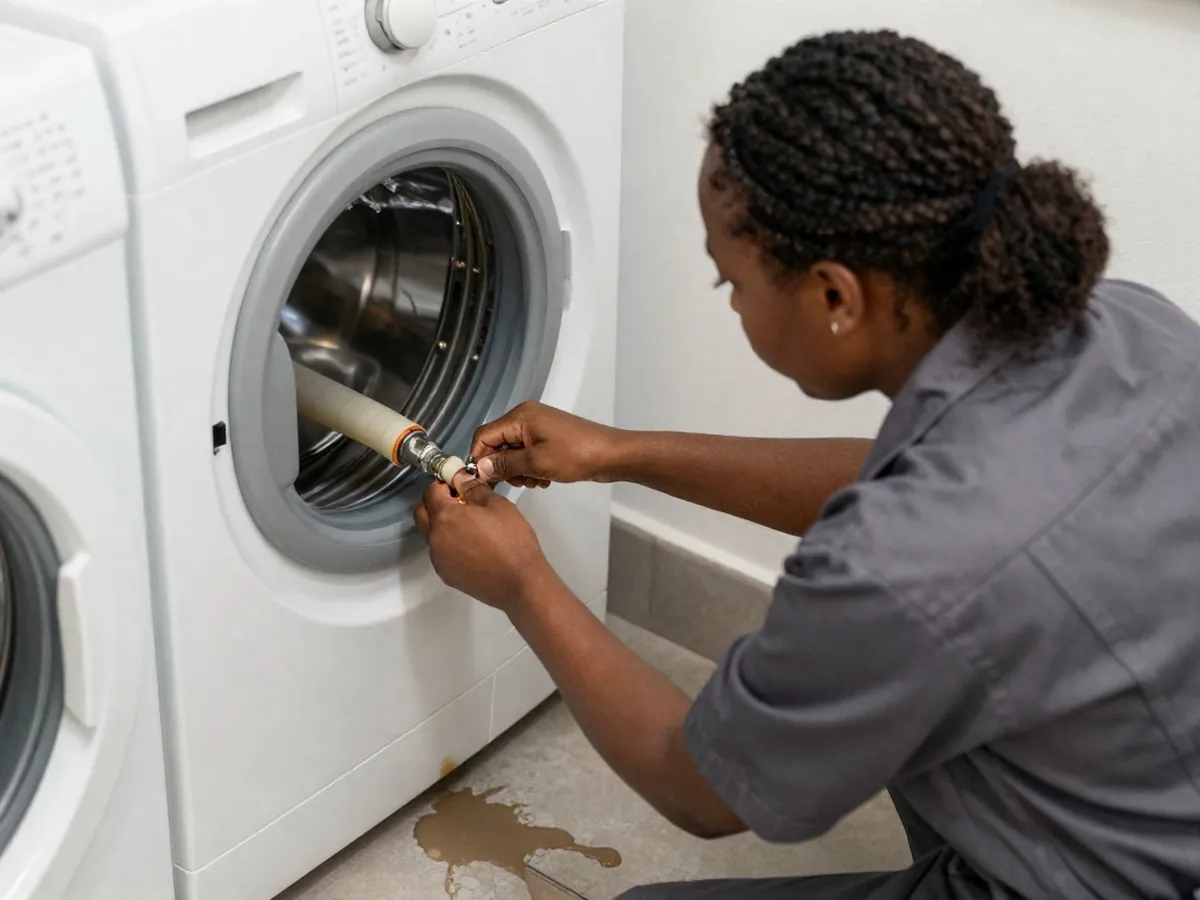
Washing machine pulled from the wall with a leaking hose and a puddle on the floor
Fig. 1Washing machine pulled from the wall with a leaking hose and a puddle on the floor

Work through it

Which appliance, which line, which floor?

  1. Name the appliance.

    A washer hose, a dishwasher drain, a water heater tank and a refrigerator ice-maker line all leak in different ways.

  2. Find out whether the water is coming from a line or from the appliance itself.

    A hose that drips only while the machine runs points one way, and a puddle that grows on its own points another.

  3. Look at what is underneath.

    Water from a laundry room or bathroom often shows up as a stain on the floor or ceiling below.

  4. Note its age.

    The contractor will ask, and so will whoever repairs or replaces the appliance.

What the contractor looks at

  1. Call (678) 940-8196 and name the appliance that let go and roughly how old it is; the contractor can then arrange a visit.

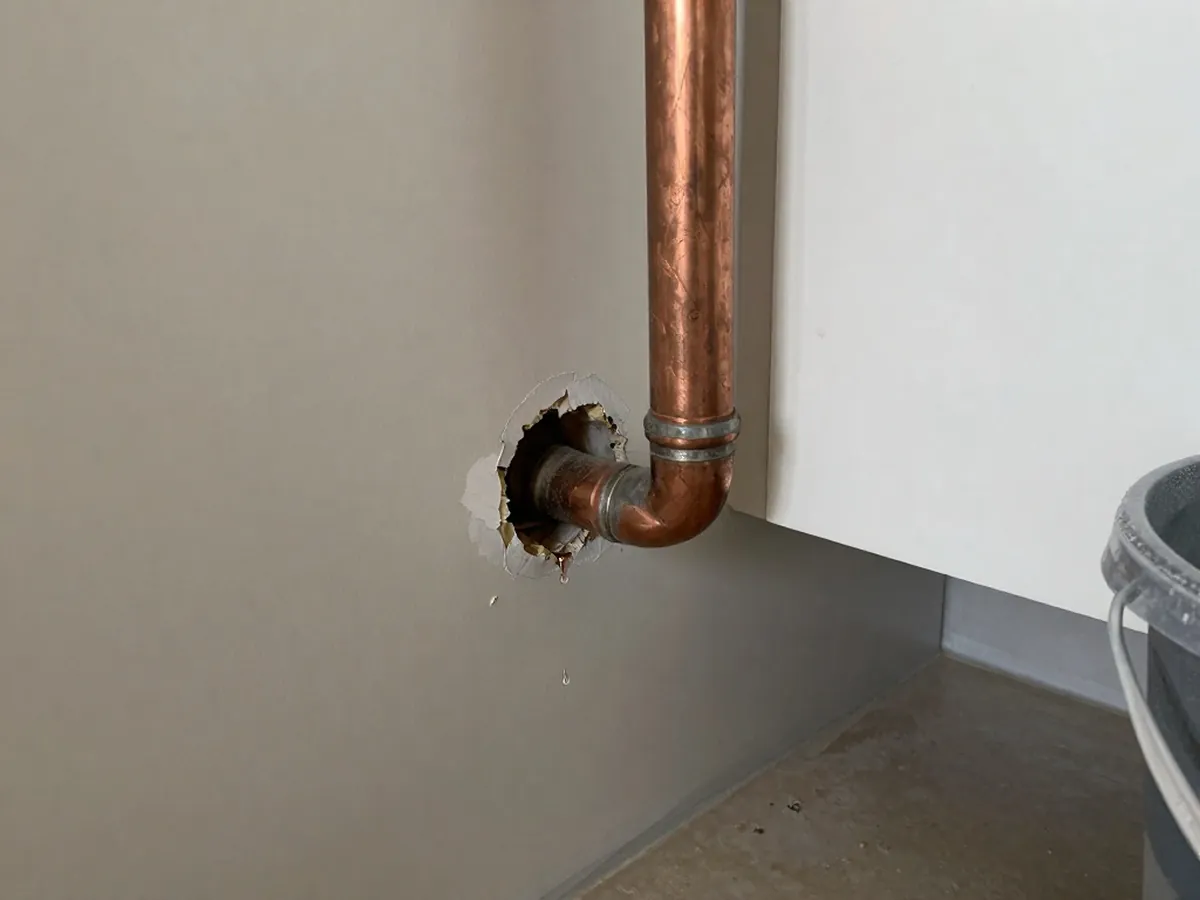
  2. Finding where the water came from: a hose, a drain line, a tank seam or a fitting.

  3. Reading moisture under the appliance, in the floor and in the wall behind it.

  4. Checking the rooms below, since water tends to travel downward from a laundry or bath.

  5. Drying the area, which can mean lifting flooring along a wall so air can reach it.

  6. Going over repair choices, and what to ask the town about a water heater swap.

Asked and answered

How urgent is an appliance leak, graded 1 to 10?

Grade 8 to 10: a gas smell, a plugged-in appliance in water, or a sagging ceiling underneath. Leave and use 911 or the utility first, then call (678) 940-8196 about the water. Grade 4 to 7: a steady drip that has reached the floor. Call this week. Grade 1 to 3: a few drops on a fitting. Wipe it dry, mark the spot, and see whether it returns.
How much can a slow leak waste?

The EPA's WaterSense program estimates that an average household loses over 9,300 gallons of water to leaks in a year, and that 9 percent of homes waste 50 gallons or more every single day to leaks. These are national numbers, not Conyers numbers, but they show why a slow drip is worth chasing down.

What does a drip pan under a water heater do?

The mold and moisture checklist from the University of Georgia recommends a drip pan under the water heater where there is none, emptied and cleaned regularly. It also lists the water heater and washing machine supply lines as places to check for leaks, along with the refrigerator drip pan, which needs emptying.

Dry it, cut it or replace it

What a slow leak does to the floor

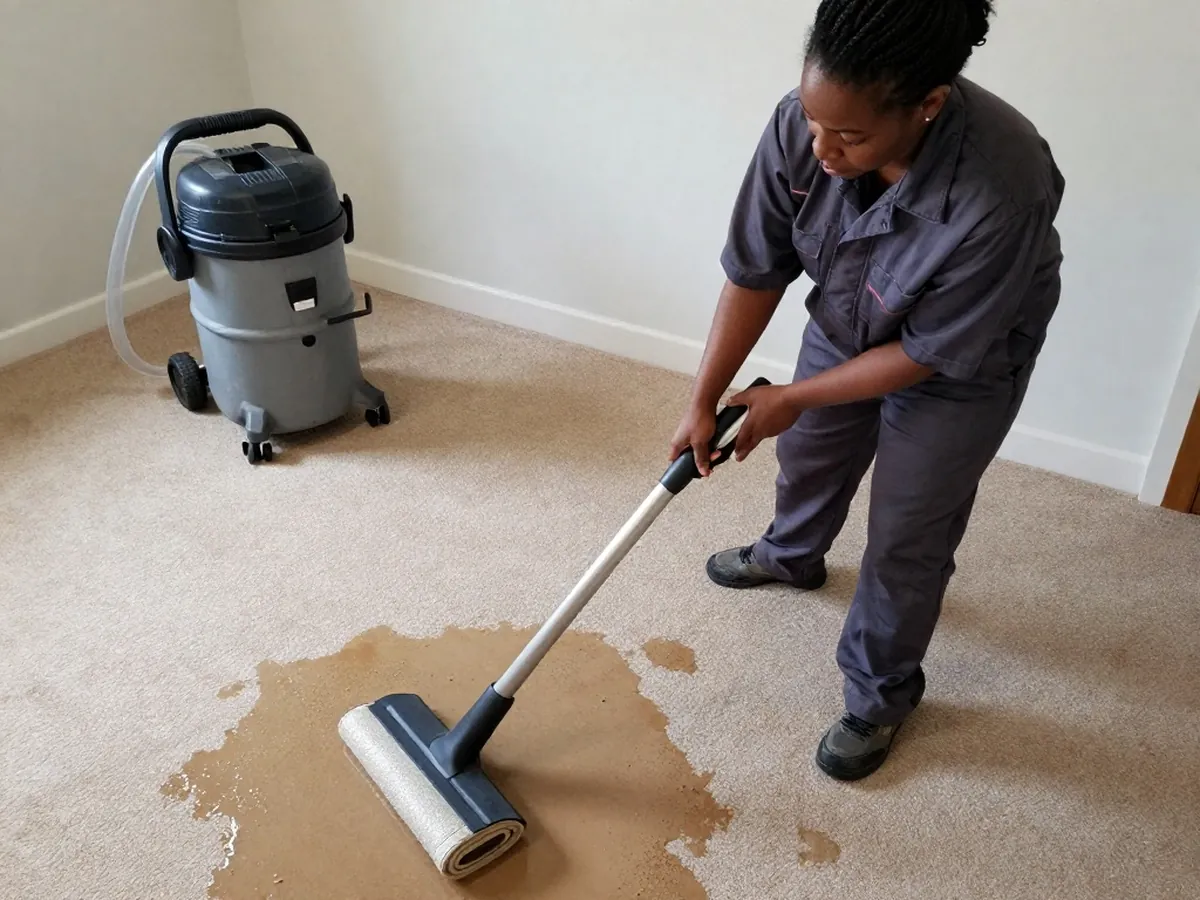
FEMA and the Red Cross say air needs to circulate around wet floors so they can dry, and that wall-to-wall carpet usually does not return to its old size after getting wet. North Dakota State says to dry wood floors gradually, because sudden drying could crack or split them, and that plywood subfloors can delaminate, which means separate in layers, under heavy moisture.

A drip that ran for weeks is a different job from a puddle that ran for an hour. The contractor reads the floor to see which one you have.

Washing machine pulled from the wall with a leaking hose and a puddle on the floor

Reading the picture

The washer in the picture

The picture shows a washing machine pulled out from the wall, a rubber supply hose leaking at the back, a puddle spreading across the floor, and a technician kneeling beside the machine to turn a valve. Washers hide their connections behind the machine, which is why many leaks go unnoticed until the floor is wet.

Where the valve sits, and whether it can be reached safely, comes before the valve itself. A puddle near a plug is a different situation from a puddle in the middle of the room.

Habits that cost more

Four habits that let a small leak grow

Mopping the puddle and stopping there.

The wall behind the machine and the floor under it can stay wet.

Ignoring a slow drip.

EPA's WaterSense program points out how fast small household leaks add up.

Letting a drip pan overflow.

The University of Georgia checklist says to empty and clean it regularly.

Reaching behind a machine that sits in water.

Cords and outlets are usually back there, and the get-help-first list covers it.

What you may notice

  • A damp spot or puddle behind a washer or dishwasher
  • Water pooling at the base of the water heater
  • A ceiling stain under an upstairs laundry room or bathroom
  • A rubber hose that is bulging, cracked or dripping at the connector
  • Flooring that has softened or lifted beside a refrigerator or sink

Paperwork and licensing questions

Replacing a water heater: which office to ask

Conyers has a plumbing permit for installing and replacing fixtures, at a $150 minimum, and the city's Planning and Inspection Services desk (770-929-4280) can say which permit fits a water heater swap. Covington applies the 2024 plumbing and fuel gas codes, with Georgia amendments. Lithonia points owners to a permit checklist. The desks are listed in contractor rules for Conyers.

Call (678) 940-8196